
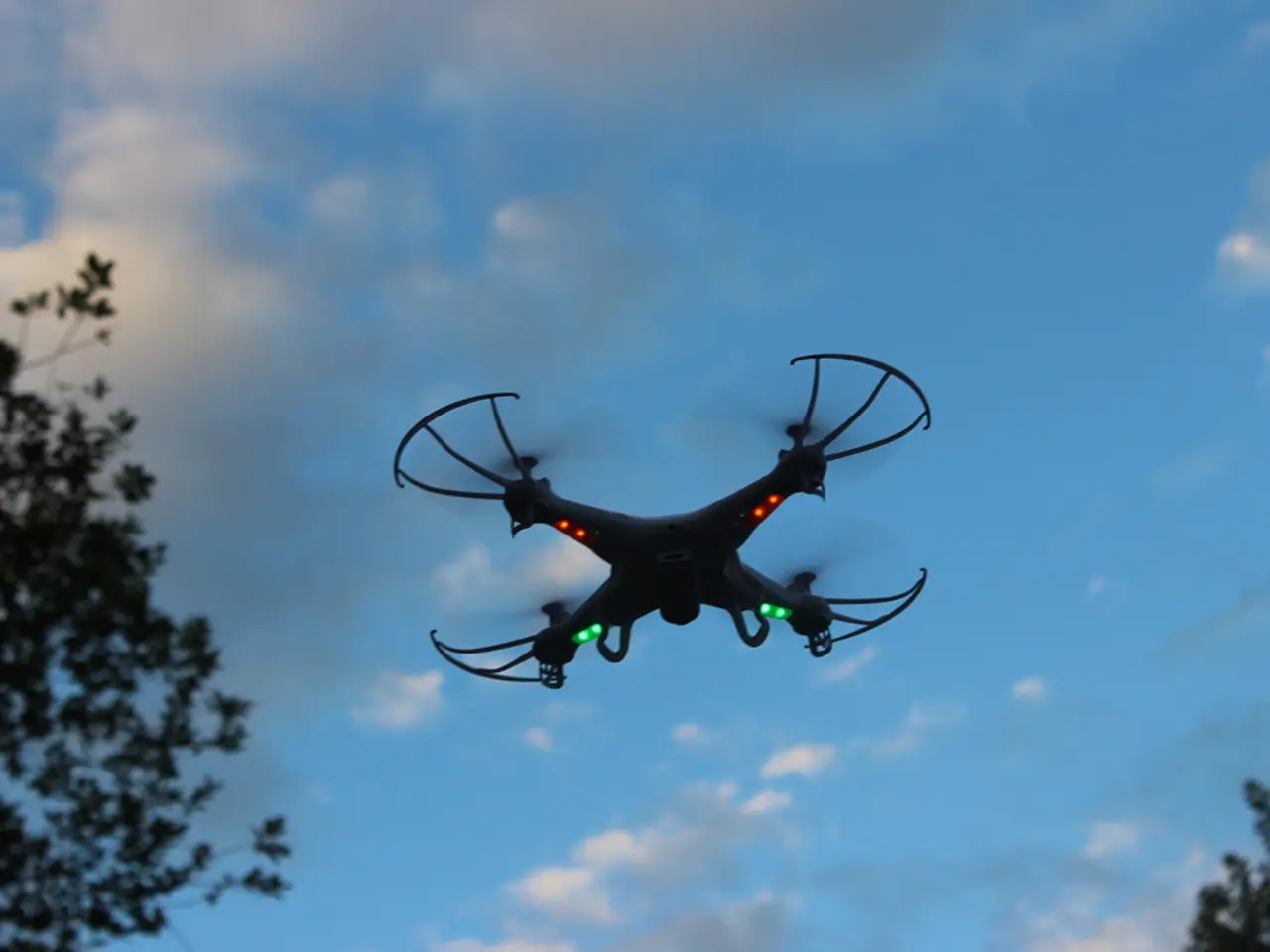
Strategies for Successful Drone Operations in Cold Weather Conditions
In the winter season, it's crucial to adjust your drone flying habits to ensure safety and optimal performance. Here are some key considerations to keep in mind when operating a drone during winter.
Firstly, battery performance is significantly impacted by cold temperatures. Lithium-ion batteries in drones lose efficiency, leading to faster drainage and voltage drops, especially below 5-10°C. To mitigate this, always use fully charged batteries kept warm before flight, if possible preheated to above 20°C. Consider battery heaters and allow the drone to hover for about a minute after takeoff to warm the battery gradually. Avoid aggressive control inputs to prevent voltage drops[1][3].
Secondly, winter conditions like fog, snow, and low light reduce visibility, making it harder to monitor the drone and safely navigate. It's best to avoid flying in heavy snow, fog, or precipitation and choose moderate weather with no wind to ensure clear visibility[1][2].
Icing is another concern during winter flights. Ice can accumulate on the drone's frame and propellers when temperatures are around or below 0°C, risking propeller damage and possible crashes. Ensure the drone and propellers are dry before assembly. If you detect icing during flight, land immediately and warm the drone before resuming[3].
Additional safety tips include checking detailed weather forecasts for wind, precipitation, and temperature before flying[1][4][5]. Avoid flying in strong winds, rain, or snow; precipitation can damage sensitive electronics and sensors[1][2][5]. Turn on and warm batteries indoors before moving outside to minimize cold exposure[2]. Be aware that condensation may fog lenses and sensors, affecting altitude readings and camera quality, especially near warm or occluded fronts[5].
In summary, preparing batteries carefully, avoiding poor visibility and precipitation, and watching for ice buildup are essential for safe winter drone operation[1][2][3][5]. Maintaining visual contact with the drone is more challenging in fog or snow, making it difficult to fly more than a hundred meters. It's best to keep drone batteries warm, either in a warm car or a well-insulated container.
Other tips include adjusting white balance settings to prevent winter images from looking blue, taking it easy on flying too high in winter due to temperature drops at higher altitudes, and increasing exposure in winter by increasing the shutter speed of your drone's camera.
It's also recommended to fully charge drone batteries before flying in winter, as winter temperatures are not optimal for battery performance and life. Always check for ice on drone propellers before each landing and launch. Remember that batteries have an optimal operating temperature range, and winter temperatures fall below this range, causing batteries to drain faster.
Lastly, lighting conditions during winter are not ideal, with gray skies making drone photos and videos look dull. To compensate, you can adjust your camera settings to increase brightness and clarity.
By following these tips, you can ensure a safe and enjoyable winter drone flying experience. Happy flying!
[1] Drone Pilot Ground School (2021). Winter Flying: A Guide for Safe Drone Operation. Retrieved from https://www.dronepilotgroundschool.com/blog/winter-flying-guide/
[2] DronesDirect (2021). How to Fly a Drone in Winter. Retrieved from https://www.dronesdirect.co.uk/blog/how-to-fly-a-drone-in-winter/
[3] DJI (2021). Winter Flying Tips. Retrieved from https://www.dji.com/education/tips/winter-flying-tips
[4] The Weather Network (2021). Winter Weather Forecast. Retrieved from https://www.theweathernetwork.com/ca/weather/forecast
[5] FAA (2021). B4UFLY. Retrieved from https://b4ufly.faa.gov/
- To compensate for the poor lighting conditions during winter, adjust your drone's camera settings to increase brightness and clarity.
- With technology advancements, it's advisable to use battery heaters and preheat your drone's batteries before flight, especially during cold weather below 5-10°C to ensure optimal performance and safety.