
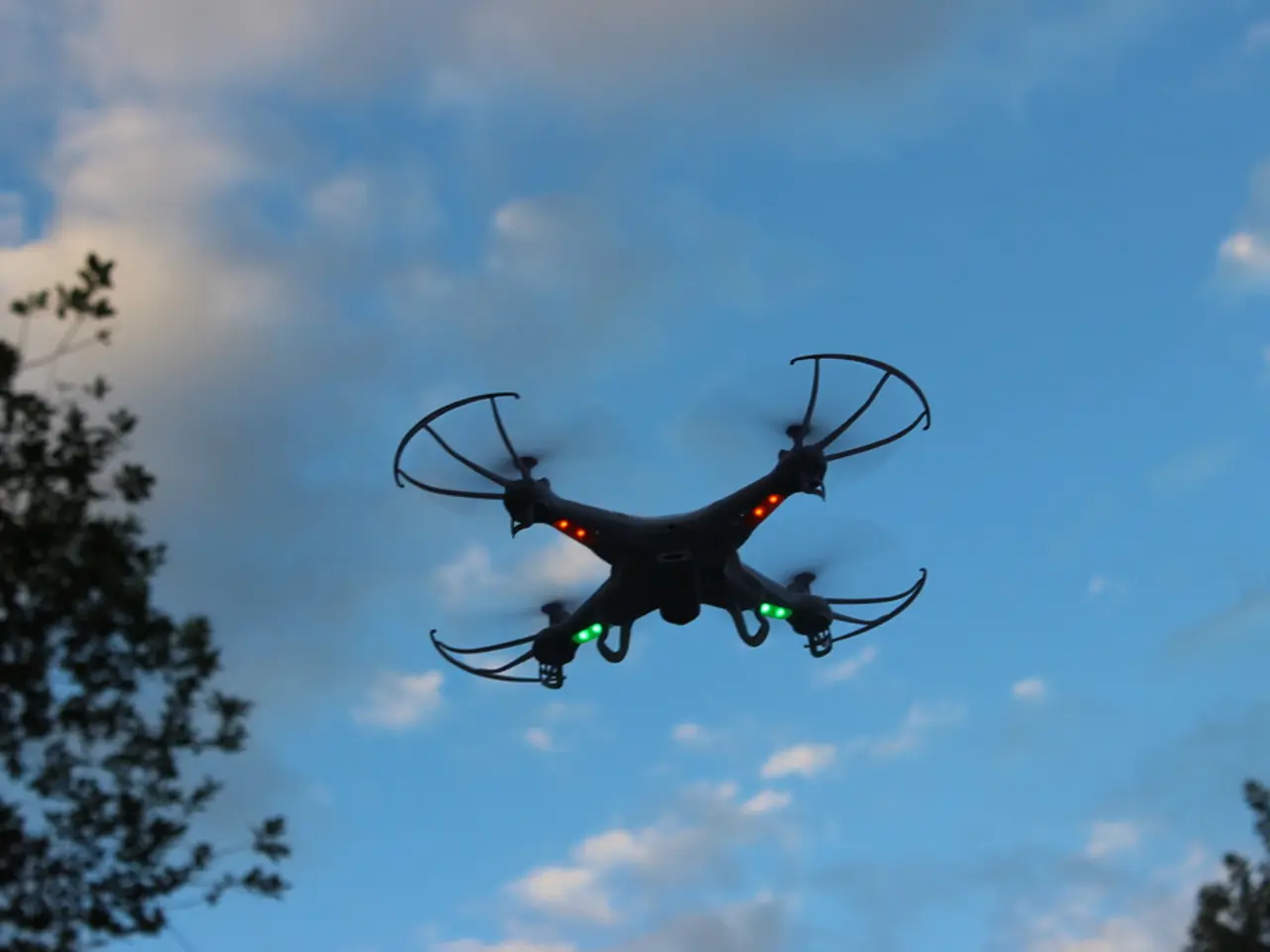
Growing acceptance of civilian drones, yet security concerns persist at elevated levels - Rise in Civilian Drone Usage Amid Persisting Safety Concerns
## Drone Acceptance and Security Concerns in Germany: A Changing Landscape
As drones continue to make their mark in various sectors across Germany, from photography to agriculture and infrastructure inspection, a dynamic interplay between acceptance and security concerns is shaping the future of this burgeoning technology.
### The Rise of Drone Acceptance
The growth of drone acceptance in Germany is underpinned by a series of factors. Regulatory frameworks, such as the EU Drone Regulation and the LuftVO, provide guidelines for safe and responsible drone use, ensuring that the technology can be harnessed effectively without compromising public safety[1].
In addition, the drone industry is witnessing the rise of comprehensive training programs for aspiring drone pilots, like those offered by Droniq. These programs encompass theoretical and practical exams to obtain the EU Remote Pilot Certificate, underscoring the importance of professional training in the industry[3].
### Evolving Security Concerns
While drone acceptance is on the rise, security concerns are evolving, prompting regulatory adjustments and technological advancements. One of the key areas of focus is data privacy and security. The debate over the security of drones manufactured by companies like DJI has led to increased scrutiny, with DJI publishing its Drone Security White Paper to address these concerns[2].
Moreover, concerns about national security are being raised, particularly in light of the potential reliance on a single supplier. This issue may lead to market diversification, potentially impacting the global aerospace industry[2].
### Fear of Accidents and Terrorist Attacks
Interestingly, the survey conducted by YouGov revealed that while the fear of accidents and crashes is decreasing, 63% of respondents still view them as a risk[4]. Additionally, the survey results indicate an increase in the fear of terrorist attacks with drones compared to 2022[4].
### The Future of the Aerospace Industry
The evolving landscape of drone acceptance and security concerns is likely to shape the future of the aerospace industry. The EU's harmonized drone regulations can enhance the industry's global competitiveness by enabling cross-border operations[4].
The emphasis on security and privacy in drone technology is driving innovation, with companies investing in advanced security features and audits to meet industry standards[2]. This trend encourages the development of more secure and reliable drones.
As security concerns prompt calls for diversification, new companies may enter the market, leading to increased competition and innovation in the aerospace sector[2]. BDLI CEO Marie-Christine von Hahn emphasizes that drones are becoming more integrated into society and will play an increasingly important role[5].
In conclusion, while the acceptance of drones in Germany is on the rise, evolving security concerns are prompting a reevaluation of the industry's reliance on specific suppliers and technologies. This dynamic landscape is likely to shape the future of the aerospace industry, with a focus on security, innovation, and regulatory compliance.
References: [1] European Union Aviation Safety Agency (EASA). (n.d.). Regulation (EU) 2019/947. Retrieved from https://www.easa.europa.eu/regulations/rules/air-operations/drone-regulation [2] Wiese, F. (2022, March 1). Security concerns about Chinese drones: What you need to know. Retrieved from https://www.forbes.com/sites/frankwiese/2022/03/01/security-concerns-about-chinese-drones-what-you-need-to-know/?sh=666584d66e6d [3] Droniq. (n.d.). Drone pilot training. Retrieved from https://www.droniq.de/dronen-pilot-ausbildung [4] YouGov. (2023, February 14). Germans fear drone terrorist attacks more than ever before. Retrieved from https://yougov.co.uk/topics/technology/articles-reports/2023/02/14/germans-fear-drone-terrorist-attacks-more-ever-before [5] BDLI. (n.d.). Speech by Marie-Christine von Hahn, BDLI President, at the "Digitalization and Aerospace" conference. Retrieved from https://www.bdli.de/de/presse/reden/digitalisierung-und-luftfahrt/
- The growing acceptance of drones in Germany is being facilitated by the implementation of comprehensive regulations like the EU Drone Regulation, LuftVO, and the development of professional training programs, such as those offered by Droniq, to ensure safe, responsible, and effective use of drone technology in various sectors.
- Security concerns, particularly in regards to data privacy, manufacturer dependability, and potential terrorist attacks, are prompting regulatory adjustments, technological advancements, and market diversification within the drone industry, shaping its future with a focus on innovation, security, and regulatory compliance.