
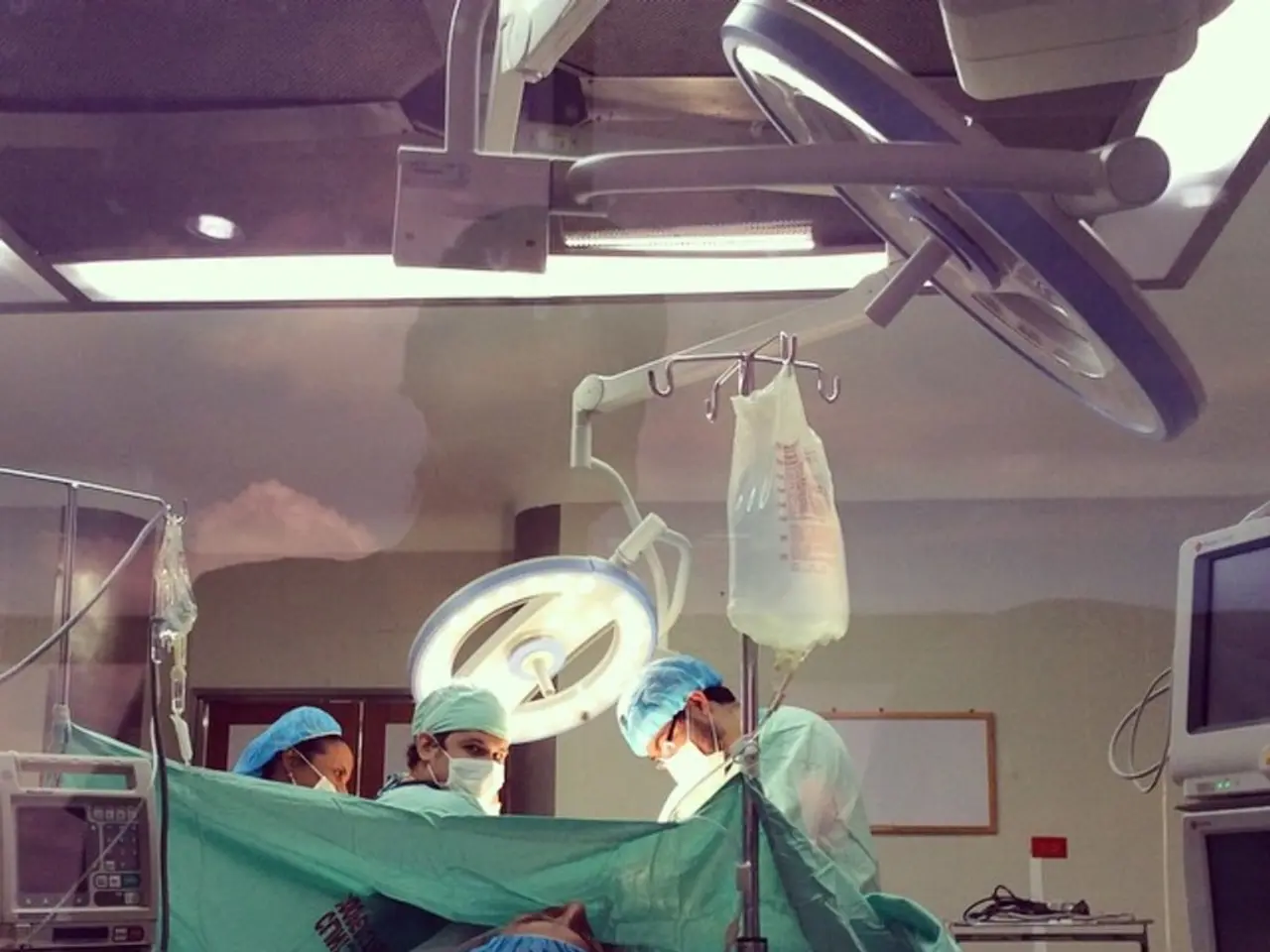
Increased Attractiveness of Shares for Intuitive Surgical
In the first quarter of 2022, Intuitive Surgical reported strong results, with a 19% growth in procedures using its systems and a 15% increase in revenue to $1.5 billion. This robust performance underscores the resilience of Intuitive Surgical's business model in the face of multiple headwinds.
The company's da Vinci system, a leader in robotic surgeries, has been used in over 1.6 million procedures in 2021, up from 877,000 in 2017. Intuitive Surgical, founded in 1995, boasts over 4,200 approved and 2,100 filed patents, giving it a significant edge over its rivals.
The quarter also saw Intuitive Surgical beat analysts' consensus estimates on both revenue and adjusted EPS. However, the company's adjusted earnings per share (EPS) was $1.13 compared to $1.17 a year ago. Since 2015, 70% to 75% of Intuitive Surgical's annual revenue has been recurring, a testament to its razor-and-blades business model.
Hospitals make significant investments when they purchase da Vinci systems, including training costs and the purchase price ranging from $500,000 to $2.5 million. Intuitive Surgical's business model is based on a recurring revenue stream from the sale of higher-margin proprietary surgical accessories, instruments, and services.
Despite the strong Q1 results and the solid business fundamentals, Intuitive Surgical's stock price has remained relatively muted or lower. This is largely due to a combination of a cautious future outlook, valuation concerns, and external market factors. The stock trades at a high forward price-to-earnings (P/E) ratio of 56.6, above the industry average, suggesting the stock might be richly valued relative to earnings expectations.
The company's net income as a percentage of revenue for the first quarter was lower at 24.6% relative to 33% in the first quarter of 2021, reflecting margin pressure due to product transitions and trade tariffs. Broader market trends like sector rotation away from high-valuation healthcare equipment stocks and overall market volatility also weigh on the stock's shorter-term momentum.
Despite these challenges, Intuitive Surgical's long-term fundamentals look solid. The company recently raised the forecast for procedure growth from its previous estimate of 11%-15% to 12%-16% for 2022. This cautious attitude, combined with valuation premiums, margin pressures, and market conditions, has led to a muted price response from investors.
However, the current discount on Intuitive Surgical's share price, following the announcement of its first-quarter earnings, presents a potential opportunity for patient investors. Analysts do project a solid earnings growth rate of about 11-14% annually over the long term, indicating healthy fundamentals, yet concerns over overpaying for the stock persist.
[1] Source: Seeking Alpha (link) [2] Source: Yahoo Finance (link) [3] Source: The Motley Fool (link) [4] Source: MarketWatch (link)
- With a consistent revenue stream from the sale of proprietary surgical accessories, instruments, and services, Intuitive Surgical's business model is based on the principles of a 'razor-and-blades' model, similar to the finance and investing strategies in technology.
- The high forward price-to-earnings (P/E) ratio of Intuitive Surgical's stock, above the industry average, raises questions about the stock's valuation, suggesting that investors may need to be cautious about investing in the company given the current market dynamics.
- Despite some margin pressure due to product transitions and trade tariffs, analysts anticipate a solid earnings growth rate of about 11-14% annually for Intuitive Surgical over the long term, potentially presenting an opportunity for patient investors looking at finance and investing in the technology sector.