Discussion at Russia Retail Week Highlights Technical Advancement Options
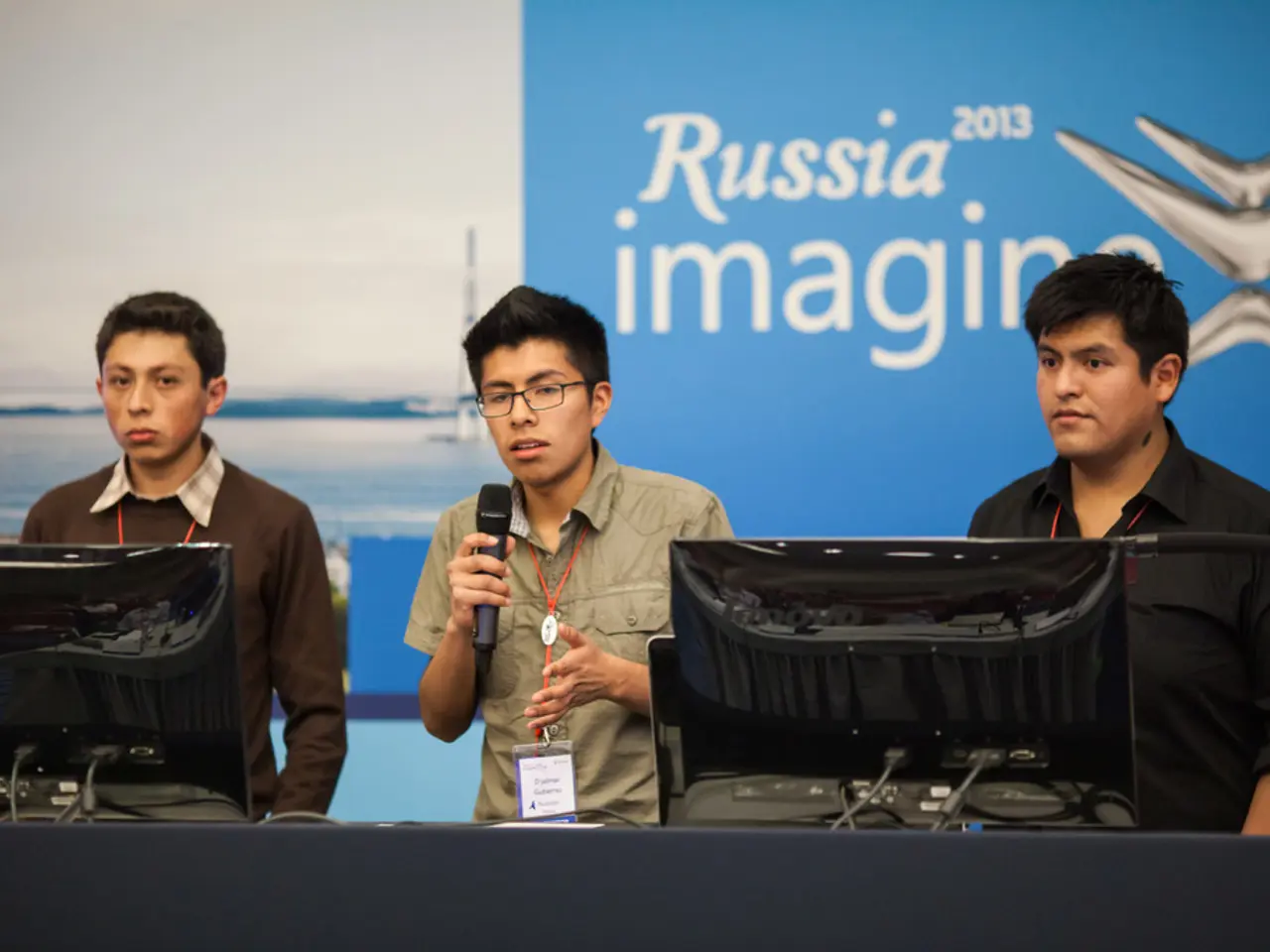
In the bustling city of Moscow, from June 2 to 5, industry experts gathered for the 11th International Business and Power Forum 'Russian Retail Week - 2025'. Although the search results do not specifically mention the discussions at this forum, broader trends and technological advancements relevant to the Russian retail industry suggest a focus on integrating advanced technologies, enhancing customer experiences, and leveraging digital innovations to drive growth.
One of the key trends observed is the adoption of Artificial Intelligence (AI) and Machine Learning (ML) in retail. These technologies are increasingly used globally to enhance customer experiences and improve operational efficiency. In Russia, similar trends might be observed, focusing on personalized shopping experiences and optimizing supply chains.
The Russian market is also likely embracing digital innovations, including e-commerce platforms and mobile payments, to meet consumer demand for convenience and accessibility.
Russian-specific developments are also noteworthy. For instance, Russia is set to launch its first foldable smartphone, which could influence retail strategies, especially in telecom and electronics sectors, by introducing new product categories and enhancing customer interaction with technology.
Innovation and technological advancements are also highlighted at forums like the SPIEF, suggesting that Russian retail might increasingly focus on integrating cutting-edge technologies to stay competitive and attract consumers.
Future predictions for the Russian retail sector include a shift towards unified commerce platforms that seamlessly integrate online and offline shopping experiences, enhancing customer convenience and loyalty. Retail stores may evolve into experiential hubs and fulfillment centers, focusing on immersive experiences and quick transaction processes.
Consumers are increasingly interested in the origin and sustainability of products, which could lead to more emphasis on supply chain transparency in Russian retail.
Despite the focus on technology, it's important to note that not all trendy technologies have practical meaning for retail. However, experts such as Ivan Melnik predict that technology is expected to accelerate economic growth and replace the decreasing supply of labor in retail.
Sber, a prominent player in the Russian retail sector, is developing technologies and implementing modern solutions based on GenAI, primarily focusing on internal changes. Sber's modern solutions aim to help partners develop their business by freeing up and redistributing resources for tasks requiring human participation.
Azbuka Vkusa, another key player, has already launched a store without cashiers and salespeople, and tested the first self-service checkouts. The Ministry of Industry and Trade supports innovations that enable automation of stores and warehouses, reducing the number of employees.
The main challenge in retail, according to Albert Gusev of SPAR in Russia, is not just automating processes, but thinking ahead 3-5 years. The Ministry of Industry and Trade's key focus in 2025 is the development and application of robots on an industrial scale.
In conclusion, while specific details from the 'Russian Retail Week' are not available, the broader trends indicate a focus on integrating advanced technologies, enhancing customer experiences, and leveraging digital innovations to drive growth in the Russian retail sector. The 11th International Business and Power Forum 'Russian Retail Week - 2025' serves as a platform for industry experts to discuss and shape the future of retail in Russia.
- As the Russian retail sector evolves, it's possible that discussions at events like the 11th International Business and Power Forum 'Russian Retail Week - 2025' might include the integration of Artificial Intelligence and Machine Learning to enhance customer experiences and operational efficiency, following the global trend.
- In line with the broader trends, the Russian market might be expected to incorporate advanced technology, such as digital innovations, e-commerce platforms, and mobile payments, to cater to consumers' demand for convenience and accessibility in the business sector.